Meta Description: How we solved seal cracking at -30°C and a failed 264-hour salt spray test on a solenoid plunger assembly for a Russian customer—real fixes, real test data.
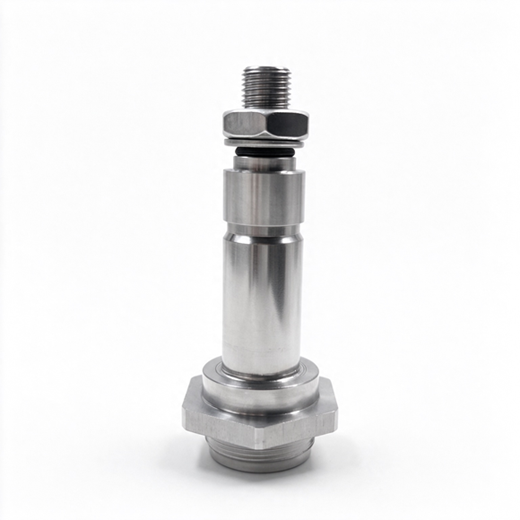
When a Russian customer sent us a drawing for a Solenoid Plunger Assembly | 12V/24V DC | Custom Stroke & Force | For Solenoid Valve & Actuator, the machining side looked straightforward. 12V/24V DC coil, custom stroke and force, 430FR plunger, seamless 304 guide tube. We had done this before. The precision dimensions came in within tolerance on the first batch. Then the problems started—not in the metal, but in two places that are easy to underestimate: the rubber seal and the plating.
This article is about what actually happened, what failed, and what we changed. If you are sourcing solenoid plunger assemblies for cold-climate or corrosive environments, these are the questions you should be asking your supplier.
Problem One: The Seal Cracked at -30°C

The customer specified operation down to -40°C. Our Qimao Metal Manufacturer standard NBR seal passed our normal checks, but it was not rated for that range. The first sample of Solenoid Plunger Assembly | 12V/24V DC | Custom Stroke & Force | For Solenoid Valve & Actuator shipment reached the customer and failed in their cold chamber: the seal cracked at -30°C, before even reaching the target low temperature.
The root cause was not the machining. It was the material selection. Standard NBR hardens and loses elasticity at low temperature, and the specific compound we were using had a brittle point well above -30°C. The dimensional fit was correct; the rubber simply could not flex at that temperature.
Qimao Metal Manufacturer changed rubber suppliers. The new compound was selected against the actual low-temperature requirement, with a brittle point and compression set verified for -40°C service, not just “cold resistant” on a data sheet. We re-machined the seal groove to match the new compound’s compression set behavior, because a different rubber deflects differently under the same squeeze. New samples were sent, and the customer’s cold chamber test passed.
The lesson: for cold-climate solenoid valves, the seal compound is a design parameter, not a catalog pick. Ask for the brittle point and the compression set at the service temperature, not just the material name.
Problem Two: 264-Hour Salt Spray Failed on the First Run
The products of Solenoid Plunger Assembly | 12V/24V DC | Custom Stroke & Force | For Solenoid Valve & Actuator second issue was corrosion. The customer required a 264-hour neutral salt spray test. Qimao Metal Manufacturer first batch failed. The plating was within our normal thickness range, but the test exposed weak points—specifically at the thread tips and sharp corners, where coating thickness naturally runs thinner.
Qimao Metal Manufacturer did not simply plate thicker everywhere. We increased the plating thickness to 12–15 μm and set a separate requirement that the coating at thread tips and sharp edges must be at least 10 μm. Sharp corners are where salt spray finds the substrate first, so that is where the thickness has to be controlled, not averaged. We also switched to a thick-layer chromate passivation to improve the barrier performance of the coating.
The next batch will run a 264-hour neutral salt spray test before delivery to confirm the fix. That is now part of the inspection plan for this part, not a one-time experiment.
The lesson: salt spray failure is usually a corner-thickness problem, not an average-thickness problem. Ask your supplier how they control coating at thread tips and edges, and whether the salt spray test is part of routine inspection or only a sample qualification.
What This Job Changed in Our Process
Two process changes came out of this job and now apply more broadly. First, for any cold-environment part, the seal compound is selected against the service temperature and the groove is matched to that compound—not chosen from a standard list. Second, for plated parts with salt spray requirements, we specify minimum coating thickness at edges and thread tips, not just a target range, and we verify with the actual test duration the customer requires.
The machining dimensions were never the problem on this job. The problems were at the interfaces—rubber to metal, and coating to substrate. That is where cold-climate and corrosive-environment solenoid assemblies usually fail, and that is where a supplier’s process discipline actually shows.
About the Part
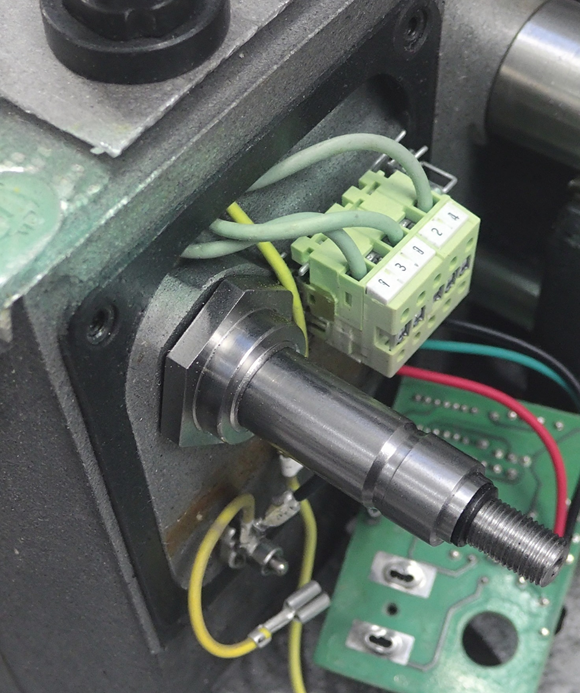
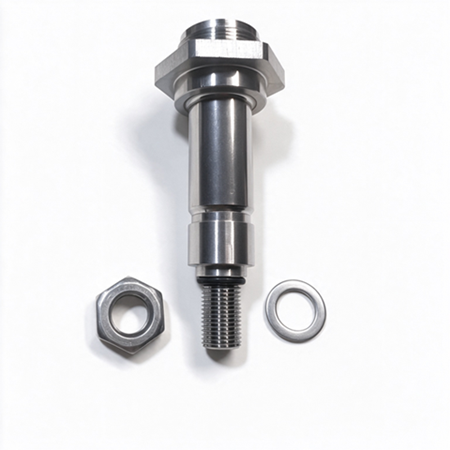
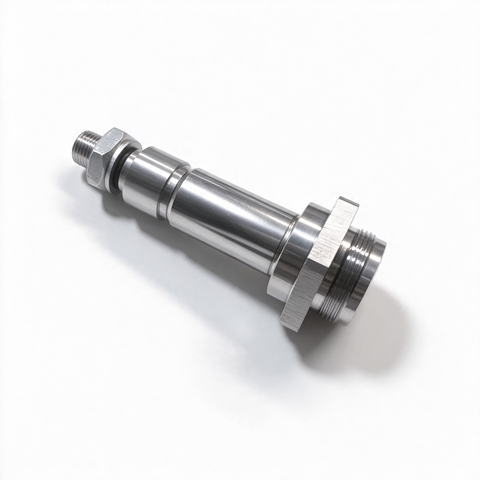
The assembly is Solenoid Plunger Assembly | 12V/24V DC | Custom Stroke & Force | For Solenoid Valve & Actuator applications, with custom stroke and force matched to the valve body. Plunger is 430FR magnetic stainless, guide tube is seamless 304, and the assembly is 100% pressure-tested before shipment. Our shop holds IATF 16949 and ISO 9001 certification, and inspection stays in-house with our own metrology equipment and QC team.
If you are sourcing a solenoid plunger assembly for cold-climate or salt-spray-exposed service, send us the service temperature and the test duration you require. We will tell you what seal compound and coating thickness the job actually needs—before the sample ships, not after it fails.