
Product Brief:
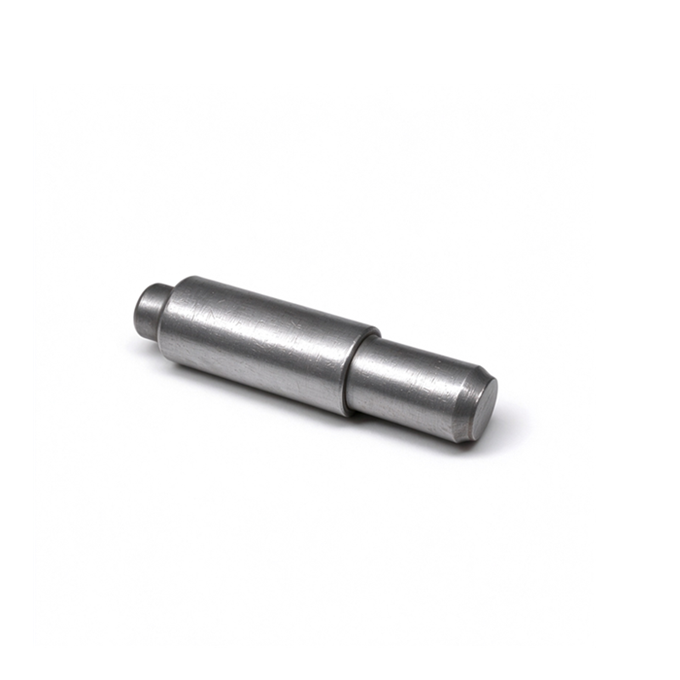
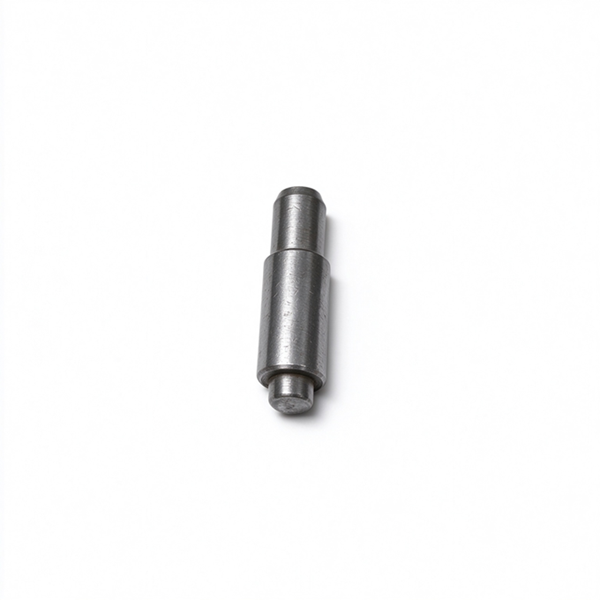
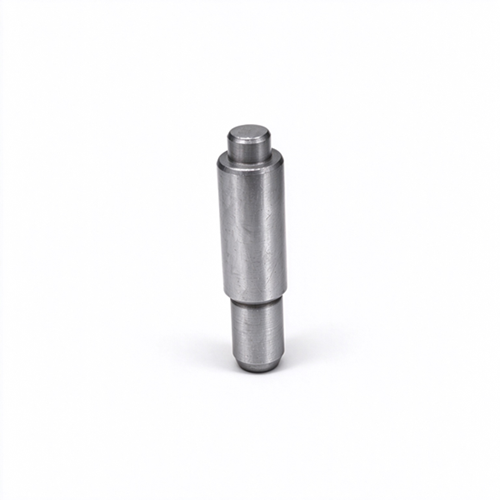
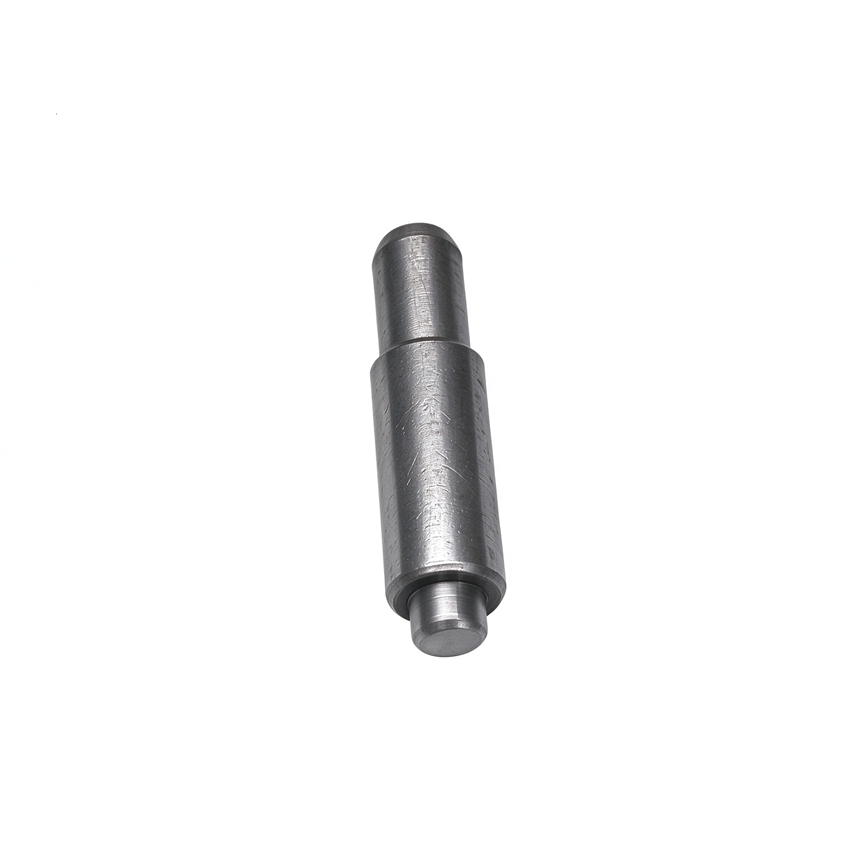
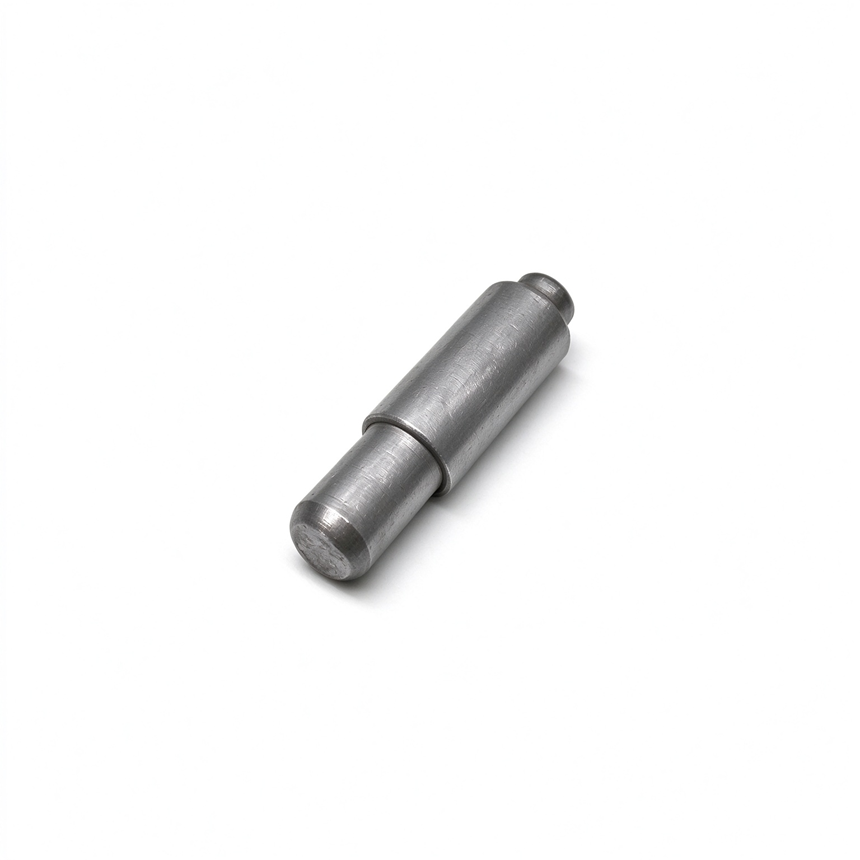
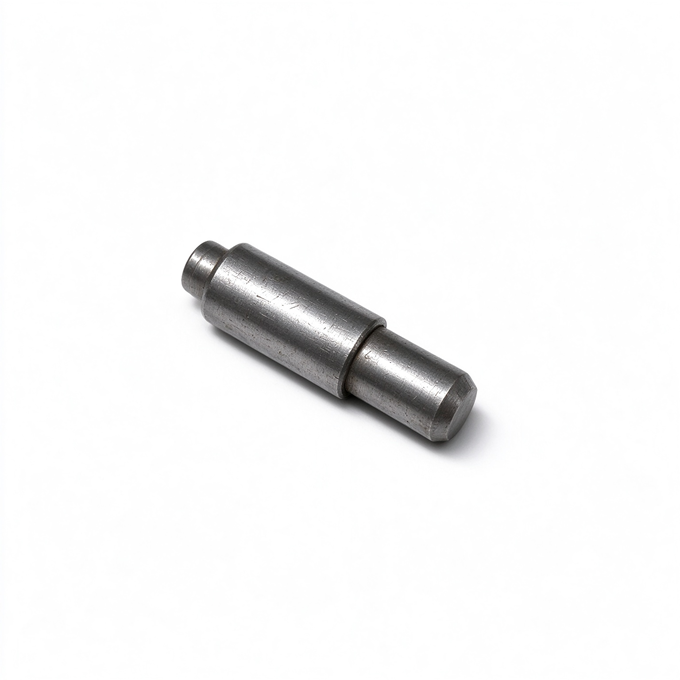
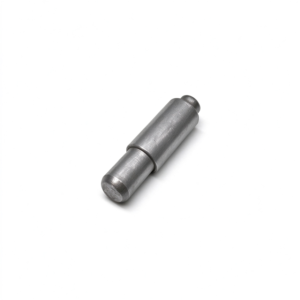
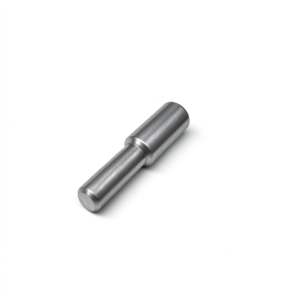
Cold-headed stepped dowel with two ground diameters. The heading process work-hardens the grain flow, so yield strength beats a machined pin from the same wire. One diameter presses, the other guides. For mold and fixture work where hole sizes differ and you don’t want two separate pins.
The smaller diameter acts as the lead-in, finding the bore before the larger diameter engages, which keeps blind-hole assembly from binding. Each diameter carries its own tolerance band—press-fit on the load side, slip-fit on the guide side—and the formed shoulder seats against the component face to set depth. Concentricity between the two diameters is what actually controls locating accuracy, so we check runout per lot rather than trusting as-formed capability.
Product Description:
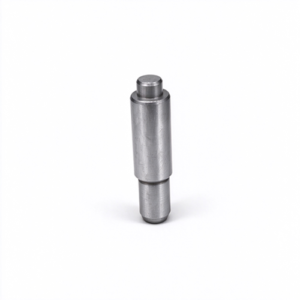
The Stepped Dowel Pin – Precision Cold-Headed Step Dowel for Alignment is formed by cold heading rather than cut from bar stock. The process upsets wire into the stepped geometry, which work-hardens the material and improves yield strength compared with machined pins from the same base steel. The result is a locating pin that holds up under repeated assembly cycles while keeping per-piece cost low at volume. Each diameter is held to its own tolerance band, so the press-fit side stays put while the clearance side slides freely. Secondary grinding is applied where tighter fit classes are specified, and chamfers on both ends ease insertion without galling the bore.
Product Specification:
| Product Name: | Item No.: | Material: | Measurement(mm): | Surface Finish: | Weight(g): | ||
| L: | W: | Dia: | |||||
|
Stepped Dowel Pin – Precision Cold-Headed Step Dowel for Alignment |
QM3013 | Stainless steel | 26.08 | / | 6.95/5.74/4.38 | Polish | 6.34 |
Product Details:
The smaller diameter is the lead-in. Stepped Dowel Pin – Precision Cold-Headed Step Dowel for Alignment finds the hole before the larger diameter engages, which is why stepped pins work in blind-hole setups where a straight pin would bind. Each diameter carries its own tolerance band—press-fit on one side, slip on the other, and the shoulder takes the seating load. Concentricity between the two diameters is the spec that actually determines locating accuracy, not the individual OD tolerances. We check runout per lot. If the drawing only calls out diameters and ignores concentricity, ask for it. That number is what keeps the part from walking after a few cycles.
Main Feature:
-
Stepped Dowel Pin – Precision Cold-Headed Step Dowel for Alignment grain flow runs with the step, not through it. Cold heading forms the shoulder without interrupting the material structure. A machined shoulder is a stress riser; a formed one isn’t.
-
Two fits on one pin. Assign press-fit to the load-bearing diameter, slip-fit to the guide diameter. One part does what two straight dowels can’t.
-
Chamfer angle matters. 30° formed chamfer engages the hole before the shoulder contacts the face. A 45° cut chamfer can catch on a burred bore edge.
-
Concentricity checked, not assumed. Runout between diameters verified per lot. The as-formed capability is good.
Application:
-
Stepped Dowel Pin – Precision Cold-Headed Step Dowel for Alignment for mold plates with different hole sizes. Core plate and cavity plate often get reamed to different diameters. A stepped pin handles both without a sleeve.
-
Blind-hole fixture plates. The lead-in diameter finds the hole; the shoulder seats against the face. No bottoming out, no air trapped under the pin.
-
Modular tooling that comes apart. Press-fit the large diameter in the base, slip-fit the small diameter in the top plate. Disassembly doesn’t disturb the interference fit.
-
Press tools under cyclic load. Cold-headed grain structure resists fatigue at the shoulder better than a machined step. If the tool runs hundreds of strokes a shift, this is the difference.
Installation Guide:
Start by checking the product Stepped Dowel Pin – Precision Cold-Headed Step Dowel for Alignment, both mating holes for burrs and debris—a stepped pin will not correct a dirty bore. Align the smaller diameter with its corresponding hole first, then press the pin using an arbor press or pin press. Never hammer a stepped dowel into place; impact loading can deform the shoulder or bell the pin end. For press-fit steps, apply steady force until the shoulder seats against the component face. If the pin has a tapped hole, use it for extraction during disassembly rather than prying under the shoulder, which can damage the seating face and ruin the fit.
Reviews
There are no reviews yet.